
Animal Welfare
End the cage age
Cage-free
Gestation
Farrowing
* Data updated as of October 2025
Our Commitment
Bompieri Group believes that better farming is possible. For years we have been investing in projects that demonstrate how improving animal welfare is not only achievable but can become a concrete model for the future of pig farming.
We work actively with NGOs such as Compassion in World Farming and Essere Animali, organisations that promote higher welfare standards, sharing with them an approach based on the Five Freedoms and the Five Domains – internationally recognised frameworks for ensuring better living conditions for animals.
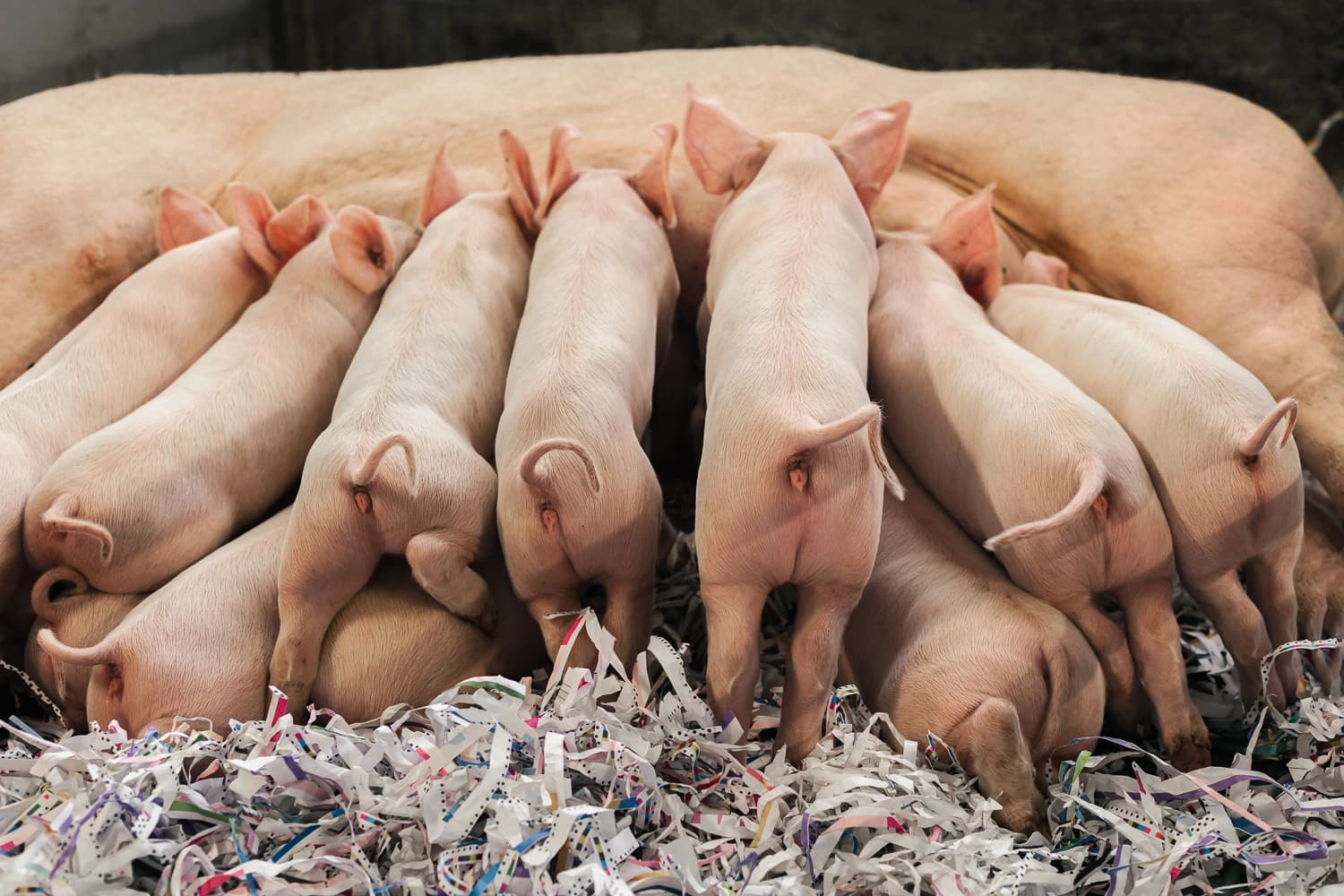
Since 2016, we have been trialling free-farrowing systems, and in 2024 we officially launched a full conversion programme for all sow units, with a clear target: to eliminate gestation and farrowing crates by 31 December 2026, in line with the European Citizens' Initiative "End the Cage Age", which aims to end the use of cages in farming across Europe.
The new free farrowing pens will include:
- Around 7 m² of space on average, with solid-floor resting areas.
- Heated and protected nests of approximately 1 m² for piglets and anti-crash features.
- Daily provision of enrichment materials such as straw and paper, encouraging natural behaviours like exploration and nest-building.
Temporary confinement of sows will be permitted only in exceptional cases, for a maximum of three days and always under veterinary supervision, but never before farrowing.
Alongside the structural conversion, we are also implementing breeding and management programmes aimed at selecting sows with stronger maternal behaviour and reduced aggressiveness towards stockpeople.
Our cage-free journey
Gestation
Farrowing
Ending routine mutilations
Since 2015, we have stopped teeth clipping and grinding, and since 2017, we have ended tail docking.
Castration is carried out only within the first 3–4 days of life, following a specific anaesthesia and analgesia protocol to ensure effective pain management.
We are committed to adopting scientifically validated and commercially viable alternatives to surgical castration as soon as they become available.
100% Intact tails

Premio Good Pig 2024
In 2024, Bompieri Group received the Good Pig Award from Compassion in World Farming, an international recognition celebrating companies that make tangible and measurable progress in improving pig welfare through innovative and more respectful farming practices.
Responsible use of veterinary medicines
Our commitment to animal welfare is part of a broader One Health approach.
Bompieri Group promotes the responsible and prudent use of antibiotics and veterinary medicines, always ensuring that animals receive the necessary treatments when required. We have developed preventive health strategies – including biosecurity measures, vaccination plans, and the use of natural substances – together with a monitoring system for all medicines used on farms.
Scientific collaborations
Bompieri Group supports its commitment to animal welfare through research and long-term scientific partnerships with universities and leading research institutes.
- Istituto Zooprofilattico Sperimentale della Lombardia e dell'Emilia-Romagna (IZSLER) – Over twenty years of collaboration on animal health and prevention programmes. Together with IZSLER, an Italian public veterinary institute specialised in animal health and welfare, Bompieri conducts systematic monitoring of pathogens and antimicrobial resistance, develops farm-specific autogenous vaccines, and implements PRRS-free breeding programmes. These activities also make use of ClassyFarm, Italy's national system for monitoring animal health, welfare and biosecurity, which helps assess the effectiveness of prevention and management measures on farms.
- University of Padua (2018–2019) – Study on pain management during piglet castration.
- INTACT Project (2023–2025) – Coordinated by the University of Milan with the CRPA Foundation, focused on evaluating structural and management interventions to reduce the need for tail docking and improve pig welfare.